Pages

Friday, April 4, 2014

Missoula County Fishing Report

I'm too broke to leave town.  That's ok, it's a big week for fishing here in town.  There is a lot going on with the fish and a lot going on for those who love them.
that downtown brown


Bitterroot: 
All of the local streams experienced a small push of water with the rain and then nice weather.  The "numora" is king on the lower half of the Root.  If you want to fish dries, it is where it's at.

For nymphing, use the same stuff you've been using all spring.  The worm in red is hot right now as is the SH Sow Bug.

I spotted one osprey on the Bitterroot yesterday, now it is really spring.  I'll keep my eye on osprey cam.

Clark Fork:
The river above the confluence with the Bitterroot just can't settle in.  It was close, but it got a push of cold water last week.  It basically ended the dry fly fishing that was shaping up and even put down the good nymphing.

Last week I hit the river below the Bitterrroot confluence on a cloudy day.  For a short while it was all out BWO heaven.  The big boys were up in the swirlys taking the adults (which look the size of green drakes after looking at midges all spring).  I love to go after the swirly fish with a "short leash" setup.

Blackfoot:
 I've seen boats heading up that way.  I would bet that the nymphing is good to great up there right now.  Deep nymphing big stonefly nymphs, small mayflies, worms and eggs will produce in the winter/spring type water.  Dry flies are probably a ways off.

Rock Creek: 
Shit-hot nymphing with stones, worms, and eggs.  No dry flies on the lower end.

Area lakes and ponds:  Beavertail and Frenchtown are 100% thawed.  Harper's will thaw next.
Walk the banks of Beavertail and look for red sided submarines.  Throw brown/green/white bugger at leading edge of submarine.  Hold on!  Repeat.


Orvis' Down the Hatch Fly Fishing Festival, one day left!


One day left!  Word on the river is, Hog Island Boatworks is going to drop a drift boat full of swag from a crane 30' tall!  I don't know whether I should plan on jumping in and throwing some cheap elbows for some strike indicators or if i'll just stand back and get some good pics for the blog.  Probably both.

100% of the proceeds are going to Montana Trout Unlimited.

Thursday, April 3, 2014

The Improved Rainbow Czech Nymph

Improved Rainbow Czech Nymph


HOOK: Size 18-14 (I like 16) standard scud hook
THREAD: 6/0 pink
BEAD: any color <1/8" dia.
BODY: Hand blend dubbing mix which incorporates UV shrimp pink, damsel blue, and some background Antron for balance and cohesion.
RIBBING: Small dia. black wire
BACK: Clear plastic from a little baggie some tying materials came in

SO WHAT MAKES IT "IMPROVED?"

I use the small dia. black wire for ribbing instead of black thread or floss.  Every Rainbow Czech Nymph I've ever bought from a shop or tied myself, which was ribbed with thread/floss, prematurely succumbs to fish teeth and or/ the ribbing just slides down the body and builds up in the bend of the hook.

Not only is the wire a million times more durable, it also helps the fly sink.  You can pretty much fish this fly 365 days a year over on the Missouri River below Holter Dam.  It is a great sinker fly when fishing another super-tiny nymph in tandem.

If anyone has any advice for how to take good macro pics with a 18-55mm lens it would be greatly appreciated. I will get a macro lens as soon as I can afford one; might be a while.

Wednesday, April 2, 2014

RBM goes volunteering with Montana FWP

I love to volunteer for events, especially if it involves digging around in the river on a beautiful morning for the benefit of trout.  Today, I was part of a small crew assisting Montana Fish, Wildlife & Parks with some maintenance on an important local fish ladder.
Marshall Creek fish ladder


Quick Background Bullet-points:  

  • Marshall Creek is an important spawning tributary for cutthroat and rainbow trout that reside in the Clark Fork River.
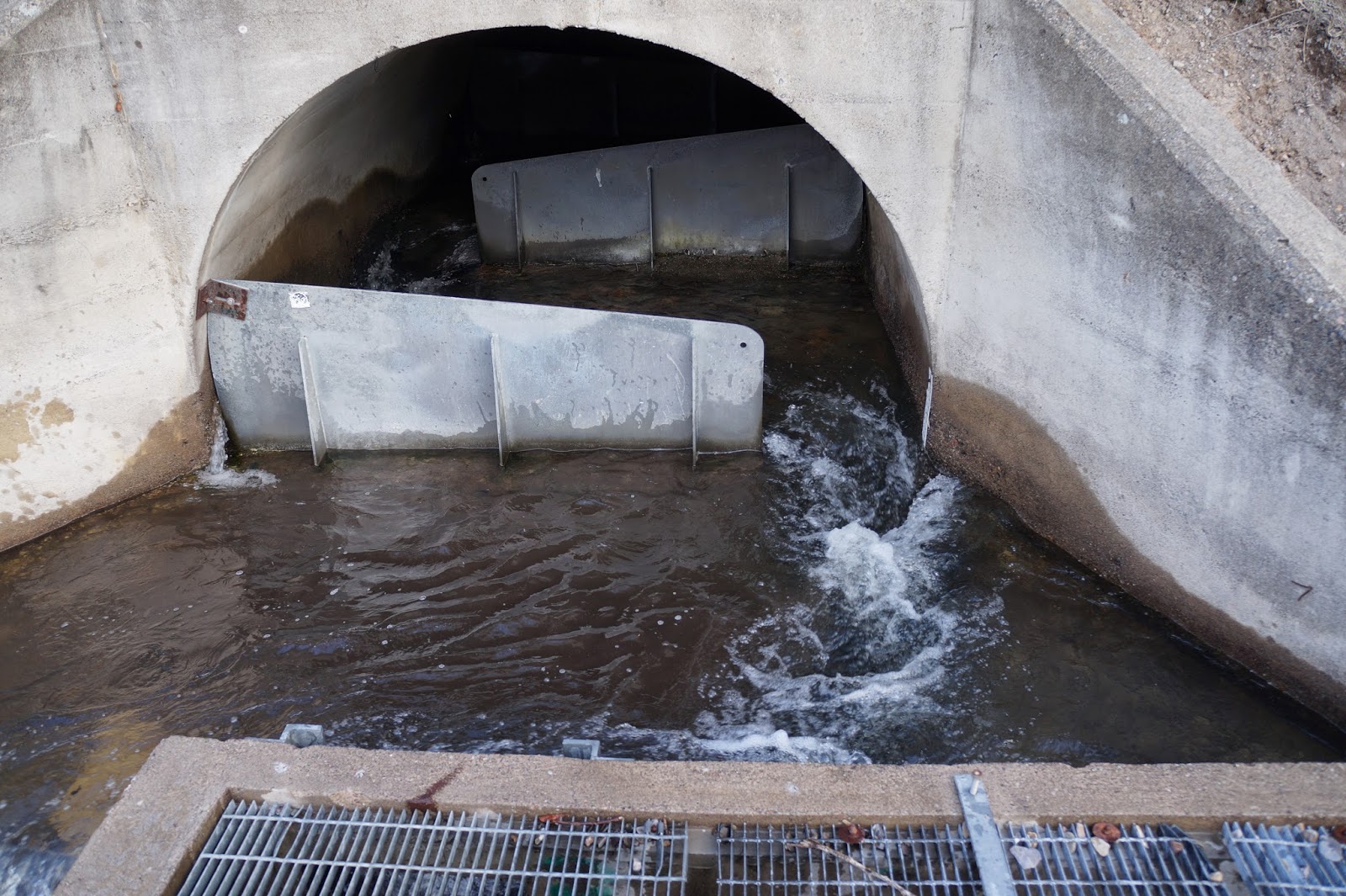
  • The creek comes out of the mountains and goes underneath the highway through a large concrete culvert to reach its mouth at the Clark Fork River.  The outlet of the culvert used to be perched way up above the Clark Fork.  Ladd Knotek of MTFWP said that trout attempting to spawn could not make it up into the culvert and into Marshall Creek. Mr. Knotek also mentioned that for a time, the stream was considered a pure strain cutthroat stream due to this disconnection.  In 1997 the Clark Fork experienced a major spring runoff and, due to the high gage height of the river, the distance to the culvert was breached by some rainbow trout.  Rainbow genetics showed up in the local population of cutts.  This made the stream a candidate for the ladder and a re-connection to the rest of the system.   
  • In 2003 the fish ladder was built "basically by hand" due to difficulties posed by the location.
  • Biological monitoring of Marshall Creek since the installation of the ladder has shown that it is very effective and that it is heavily used. 
  • The ladder was originally armored with a bunch of angular rocks on that leading edge.  Most of the reinforcement has washed away over the years along with the rocks which provide the structure for the bottom pool.  These rocks also hold an important metal baffle in place.    


When the rainbow and cutts are spawning, the level of the Clark Fork usually comes up to even (sometimes more than) with the pool at the bottom of both cascades.  The fish enter the ladder by jumping out of that pool and into the opening of the concrete structure in the right of this picture.  They then ascend a series of pools and turn the corner...


Once they're out of the ladder, they are at the height of the old culvert.


Once inside the culvert, the trout benefit from these baffles which were installed in the culvert to slow the flow of water and provide rest areas.


Will Schreck from MT FWP with 2 guys from Westslope TU hauling rock


Salmonfly (Pteronarcys californica) nymph 


re-built bottom pool


Our hard work put the ladder in good shape to provide our local trout access to their spawning grounds.  I hope they all get up there and get it on nasty!!


Volunteer season is here!  Stay tuned for more opportunities.  I will post them here.  There is a such thing as trout karma!

Tuesday, April 1, 2014

Montana Osprey Project's Hellgate Canyon Osprey Cam!


No osprey in Missoula yet but this is one of the coolest sites on the net as far as I'm concerned.  Dr. Greene says they're on their way!


"The AXIS P5534-E camera, computer infrastructure and internet connection were donated by the Riverside Health Care Center. Real time High Definition TV - available in Riverside HCC's lobby - was donated by Raptors of the Rockies. Logistic support provided by Northwestern Energy. This camera is also supported by the Cornell Lab of Ornithology and their Bird Cams Project." - Environmental Biogeochemistry Lab

One of my favorite ecology/biology professors I had when I attended UM was Dr. Erick Greene.  He has done extensive research on osprey on both coasts.  One of the projects I've been most familiar with is the studies on the Clark Fork osprey regarding the long term effects of heavy metals on both the osprey and the river system as a whole.  These pollutants are a result of intensive mining in the headwaters and tributaries of the Clark Fork River which is itself, a headwater to the massive Columbia River. 

If you tune into this blog, you will certainly hear more about the history, plight, management, restoration, astonishing fishing, and future of my favorite stream in America, The Clark Fork River. 

Please visit: http://cas.umt.edu/geosciences/osprey/nestCams/hellgate.php to learn more about the project, the people involved, and most importantly, the osprey-the coolest bird that lives!

I'll re-post this when the osprey arrive.  I'll be volunteering with Montana Fish, Wildlife, and Parks doing a temporary rehab on a local fish ladder tomorrow.  Stay tuned for some info on the ladder and some great pics.

The tarpon egg


This super effective tarpon fly was designed by Eastgate Anglers out of Cody, WY.  Leave it to some trout fishermen in Wyoming to develop one of the most successful saltwater patterns of all time!

The tarpon egg


Hook:  15# galvanized halibut hook
Thread:  Orange nylon twine
Body:  1 large navel orange
Tying Instructions:  Lay a base of nylon twine.  Insert hook through orange.  Sew orange to hook with a large needle and twine.  Hint from Easgate Angler: Cast to rising tarpon; dead drift with occasional small twitches.

This fly has saved many a day for guides in the saltwater flats from Cuba to the Texas Coast.  When the tarpon are on the spawn, snook and redfish will follow them around to gorge on their eggs.

I like to fish it under an indicator (20" crab pot buoy)


Don't forget to use plenty of weight to get it down, eggs don't float!!